The Life of Materials
Rethinking Sustainability and Learning
November 13, 2026•11 min read
The Life of Materials
Recycling matters, but it is only one chapter in the story of a material. By looking beyond disposal, educators can uncover new opportunities for creativity, resourcefulness and sustainable practice.
Rethinking our relationship with materials in early childhood settings
There is something rather satisfying about finding a new use for something that might otherwise have been thrown away. Early childhood settings are a vital arena for implementing strategies to save the planet.
In early education settings, a collection of cardboard boxes becomes a construction project. Bottle tops find their way into a counting game. Milk bottles become watering cans for the garden. Old fabric scraps become part of a weaving experience.
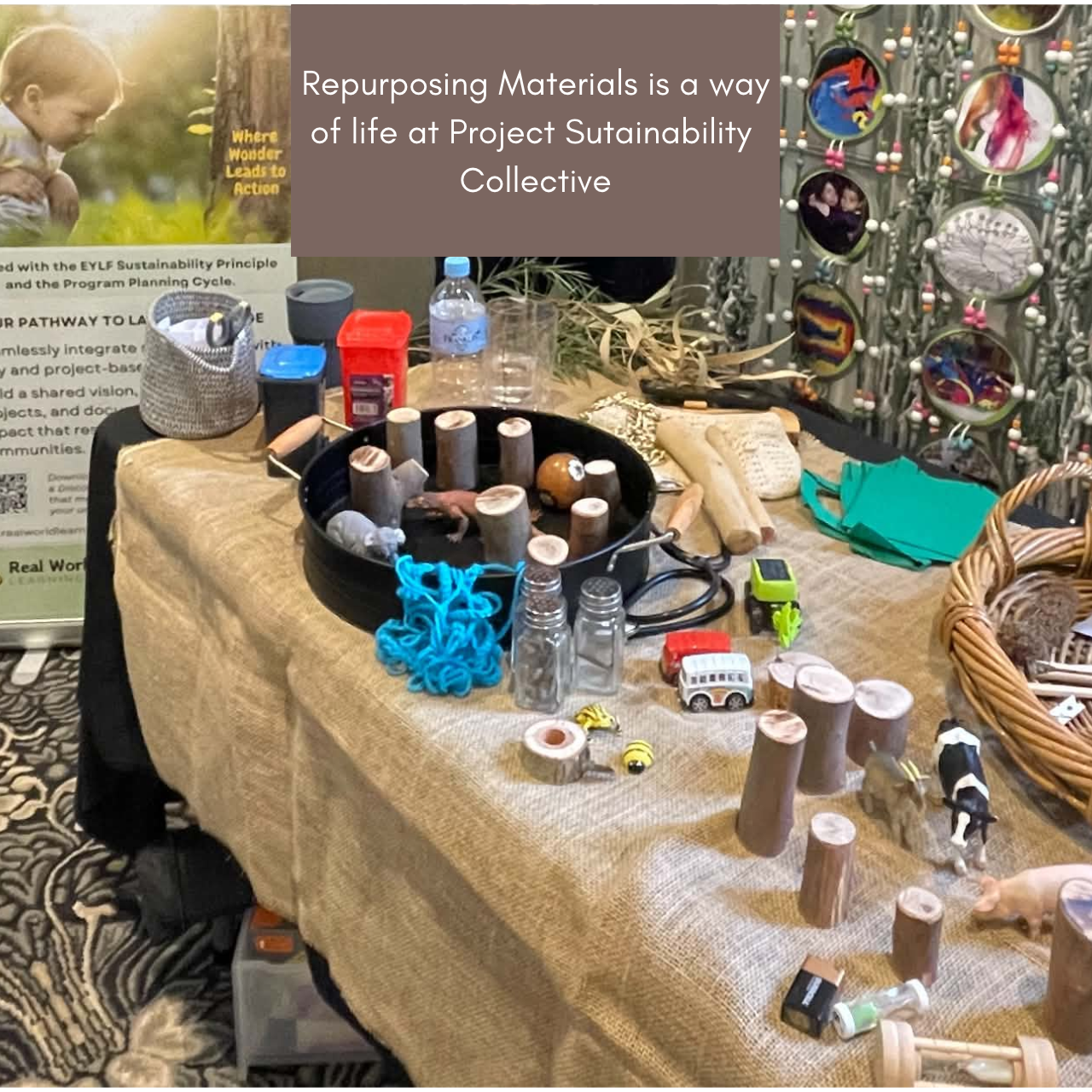
In early childhood settings, educators are often resourceful in finding ways to reuse materials. Many services collect boxes, tubes, containers and other items, offering children opportunities to explore, create and construct with things that might otherwise end up in landfill.
There's plenty to celebrate in this.
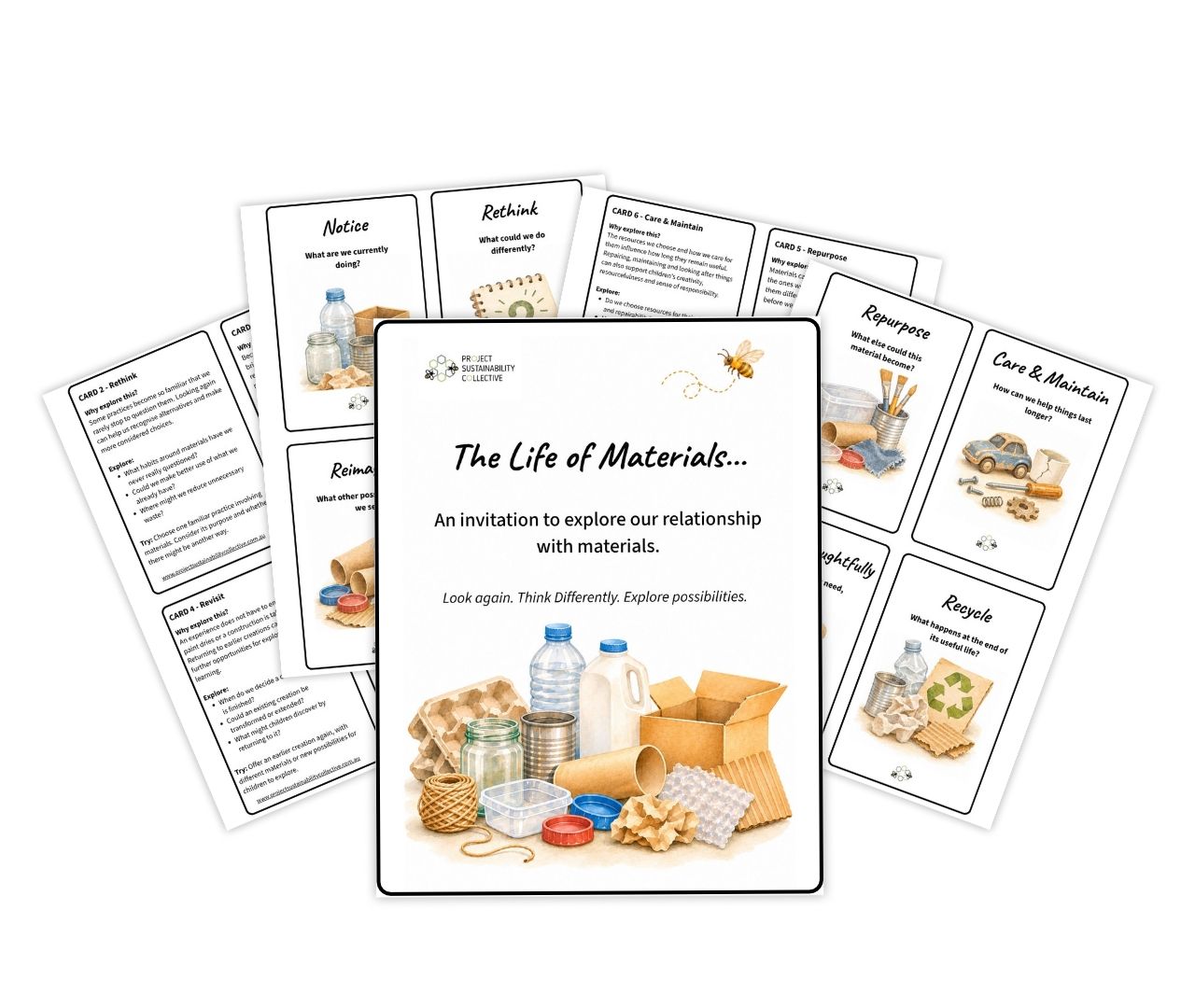
(If you’d like a companion resource, click this link and receive your Life of Materials Cards. This collection of prompts invites you to explore your relationship with materials through a sustainability lens. Each offers a different way to look at familiar practices, ask questions and discover new possibilities.)
Yet there is another question worth considering.
Materials as languages for thinking and creating
Materials are more than resources to be used. They are also invitations to think, wonder and communicate in different ways.
Loris Malaguzzi, founder of the Reggio Emilia Approach, described children as having a hundred languages for expressing their ideas, theories, emotions and understandings of the world. These languages include drawing, movement, sculpture, construction, dramatic play, music, storytelling and countless other forms of expression.
Materials help make these languages visible.
Each material brings its own qualities, textures, possibilities and constraints. Cardboard behaves differently from fabric. Wire responds differently from paper. Leaves, stones, bottle tops, paper tubes and natural materials each invite different ways of thinking, creating and investigating.
Children encounter materials through their senses. They touch, arrange, combine, transform and experiment.
A cardboard box may begin as packaging, but in the hands and minds of children it can become a shelter, a spaceship, a puppet theatre, a bridge or something entirely unexpected. Materials gain new life through children's imagination, becoming tools for communication, investigation and meaning-making.
Perhaps this gives us another reason to think carefully about the materials we choose and the ways we use them. The life of a material is not only shaped by where it comes from or where it ends up. It is also shaped by the possibilities it offers children along the way.
How often do we think about what happens to those materials before, during and after we use them?
During National Recycling Week, it's a good opportunity to look more closely at how we approach materials in our services. We might discover that some of the most meaningful opportunities for reducing waste begin well before we reach for the recycling bin.
Recycling is only part of the story
When we talk about sustainability in early childhood settings, recycling is often one of the first things that comes to mind.
We introduce recycling systems, collect materials for creative experiences, encourage children to sort waste and look for ways to give discarded items another life.
These are worthwhile practices. However, when we define sustainability primarily through recycling, we may miss important opportunities to rethink the materials we use.
Consider a familiar creative experience.
An educator collects cardboard boxes, tubes and plastic containers for children to use in their creations. The children enthusiastically decorate them with paint, glue, sticky tape, glitter and collage materials.
The experience is engaging; children are exploring different materials, and the educator has provided an opportunity to reuse items that might otherwise have been discarded.
But what happens next?
Once those materials have been covered in paint, joined with adhesive, or combined with other materials, they may no longer be suitable for recycling through the local kerbside system.
The original intention was to reuse materials, but the choices made during the experience have affected what can happen to them afterwards.
This isn't a call to abandon creative experiences that rely on reused materials. Creative exploration has enormous value, and children need opportunities to test ideas, experiment, and express their thinking through the many languages that materials make possible.
It does, however, give us something worth thinking about.
What might change if we considered a material's next evolution before deciding how to use it?
Perhaps one of the most useful shifts we can make is to start thinking about the whole journey of a material.
Where did it come from? Why did we choose it? How are we using it? Can it be used again? What happens when we have finished with it?
These questions invite us to look beyond the immediate experience and consider the decisions we make along the way.
Rethink what we bring in
Before considering how we might reuse or recycle something, it is worth asking whether we need to bring it into the service in the first place.
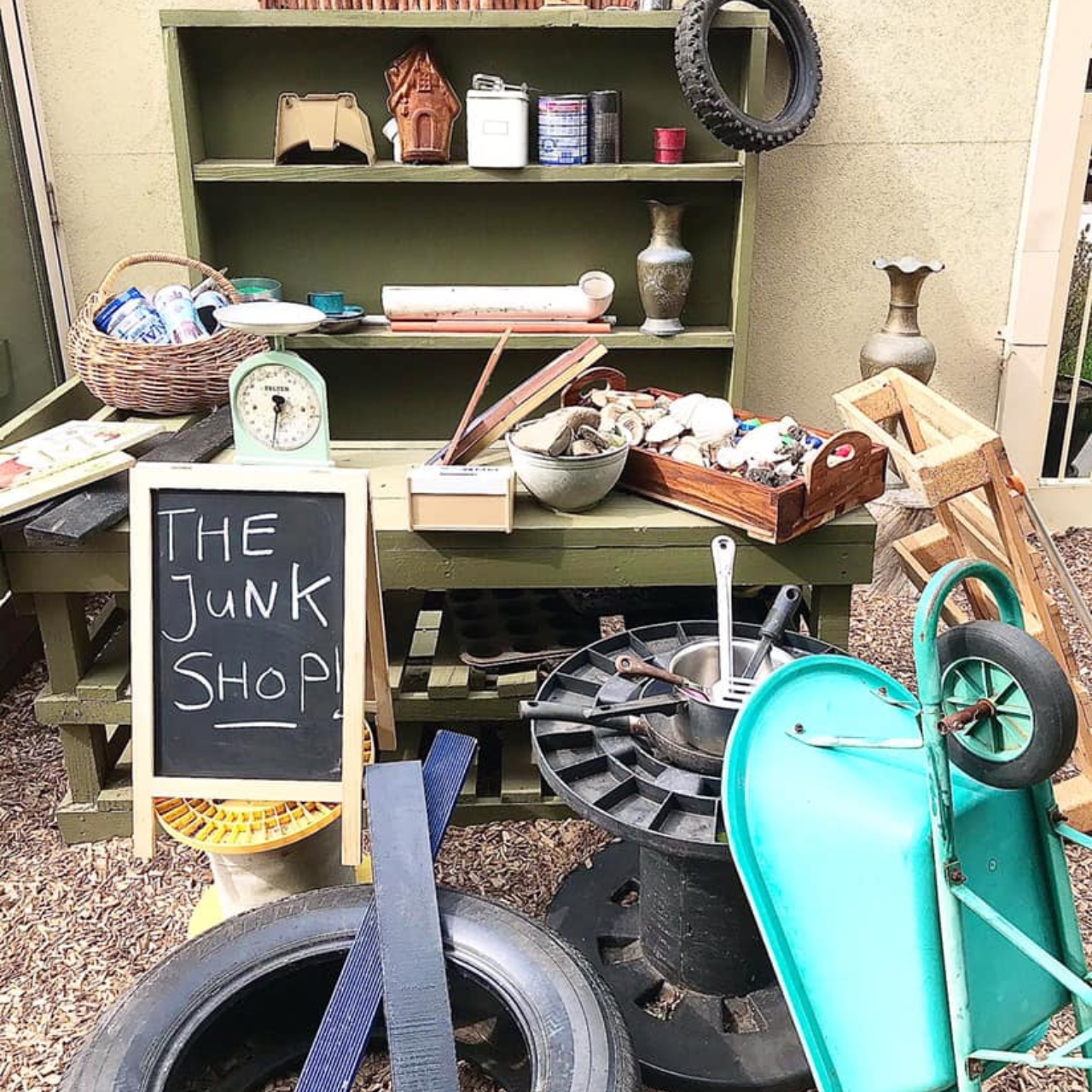
One of the simplest places to start is with a little shopping in our own storeroom.
How often do we purchase new resources because we need something for an experience, without first considering what we already have? Many services have storerooms, cupboards, and other storage areas filled with materials collected, purchased, or set aside over time. Yet educators don't always know what is available or how it might be used.
What if we approached our storeroom as a resource library, full of possibilities waiting to be rediscovered?
Before placing that next order, take some time to explore what is already there. Look beyond the obvious purpose of an item. Could something acquired for one experience be used in another? Are there materials that could be brought back into circulation? Could we combine existing resources in new ways?
When we do need to purchase something, there are other questions worth considering:
Do we really need this, or do we already have something that could serve the same purpose?
Is there a more durable option that could be used over a longer period?
Could we choose materials with less packaging?
Are we purchasing items that will only be used once?
Could we source materials locally or through community connections?
These decisions can have a considerable influence on the amount and types of materials entering our services.
They also provide opportunities to involve children in conversations about needs, choices, resources and the things we value.
Extend the life of creative experiences
What if we designed more creative experiences around materials that could be used again and again?
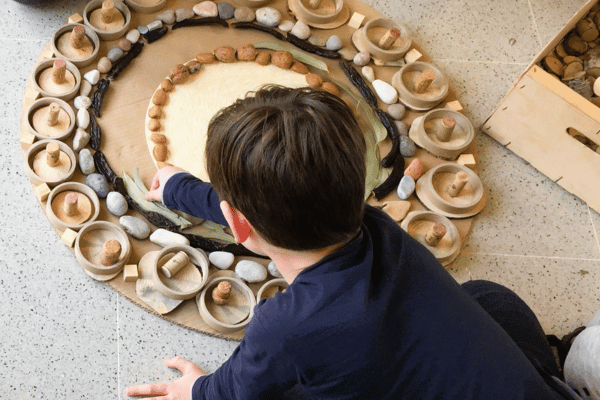
Ephemeral art, for example, offers children opportunities to create, arrange, rearrange and transform without needing to produce something permanent.
Leaves, stones, seed pods, shells, fabric pieces, wooden discs and other loose parts can be used to create patterns, pictures, structures and temporary installations.
Children can return to their creations, make changes, dismantle them and begin again.
Other possibilities include:
Offering reusable drawing and mark-making surfaces.
Creating transient artworks using natural materials.
Exploring construction experiences that can remain available over several days.
Photographing children's creations to document their thinking before materials are returned for another experience.
The emphasis shifts towards exploration and experimentation, keeping materials and ideas available for future investigations.
We might also reconsider what happens to artwork children have already made.
A painting doesn't necessarily have to be finished when a child puts down the brush. It could become the starting point for another exploration.
What might happen if we offered it again with different materials?
Perhaps children could add drawing, collage, weaving or construction elements. They might paint over parts of their original work, cut it into shapes or incorporate it into a larger collaborative creation.
Revisiting artwork gives children opportunities to develop their ideas, experiment with different mediums and make new connections.
It also invites us to reconsider the assumption that every creative experience must result in a new product, rather than in an ongoing exploration of ideas.
When is a creative experience finished?
Is it when the paint dries, when the work goes on the wall or when it goes home? Or could the experience continue through revisiting, reworking and making new discoveries?
Repurpose materials
Of course, there are also many opportunities to extend the useful life of materials by turning them into something practical.
Rather than using recycled materials exclusively for craft and construction projects, we could consider what useful resources we might create.
For example:
Milk bottles can become watering cans or sand-and-water play scoops.
Bottle lids can become counting, sorting and pattern-making resources.
Small containers and tins can become musical instruments.
Cardboard packaging can be repurposed as construction materials or used in sorting games.
Fabric offcuts can be used for weaving, threading and dramatic play.
These resources can often be used repeatedly, providing opportunities for children to explore their properties and discover different ways of using them.
It is worth considering the suitability, durability and safety of materials, including sharp edges, small parts and appropriate cleaning. The aim is to create resources that have a useful purpose and can be cared for over time.
Think beyond the service gate
There is another part of the journey we don't always consider.
What happens when children's creations leave the service?
A piece of artwork might be proudly displayed on the wall, carefully handed to a family member and taken home. It might spend a few weeks on the fridge, join a collection of other creations or find its way into a drawer.
Eventually, it may be discarded.
There is nothing wrong with families celebrating children's creations, and we certainly wouldn't expect them to keep everything children make.
However, it raises some interesting questions about how we approach creative experiences.
Do we need to produce a physical artwork every time? Could photographs and documentation capture the learning just as meaningfully? Could children choose which creations they would like to take home? Could we offer more experiences where the process itself is valued, rather than the expectation of a finished product?
Perhaps we could also find ways to share children's thinking and discoveries with families, helping them understand the learning that occurs through experimentation, revisiting, and transformation.
These conversations can help families see creativity not simply as a collection of finished products, but as an ongoing process of inquiry, experimentation and meaning-making.
What are children learning through the choices we make?
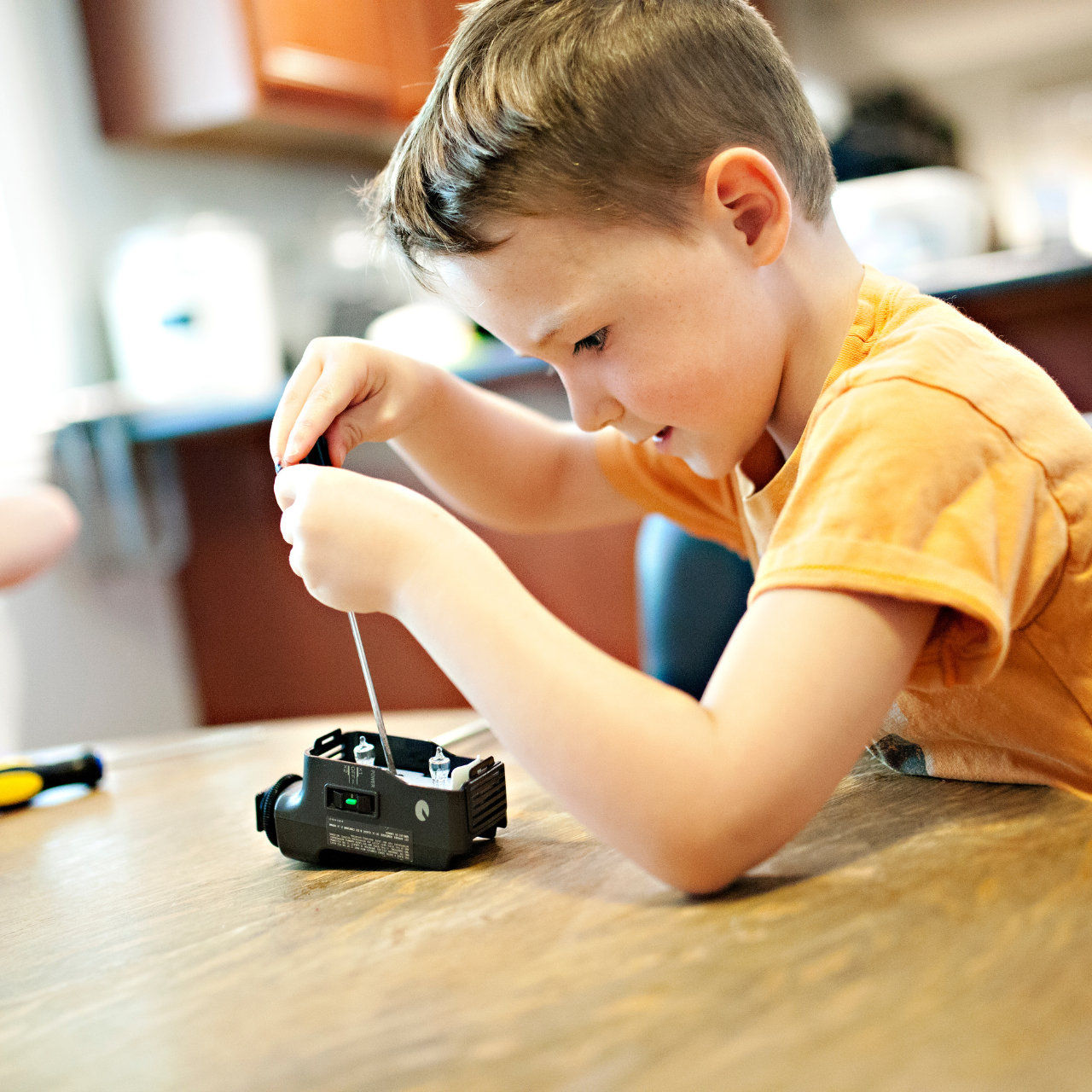
The decisions we make about materials are also educational decisions.
Children notice what we do. They see what we purchase, what we use, what we discard and what we choose to care for.
They experience whether materials are treated as disposable or valuable resources.
These everyday experiences provide opportunities for children to develop an understanding of resources, consumption, waste, responsibility, and our relationships with the world around us.
We can also involve children in investigating questions such as:
Where do our materials come from?
What are they made from?
How many different ways can we use them?
What happens when we combine different materials?
How can we care for the things we use?
What happens when we no longer need something?
These conversations help children develop understandings that extend well beyond knowing which bin to use.
They also create opportunities to explore the environmental, social and economic dimensions of sustainability through everyday experiences.
Start with something familiar
You don't need to change everything at once. In fact, some of the most useful discoveries begin with taking a closer look at something you already do.
Choose one material that features regularly in your service. It might be cardboard, paper, plastic containers, bottle tops or fabric.
Trace its journey.
Consider where it comes from, how it is used, what happens after the experience and what possibilities might exist for extending its life.
You might discover something about your own practice that you hadn't previously considered. Perhaps there is an opportunity to rethink a purchasing decision, introduce more ephemeral experiences, create a collection of reusable resources or reconsider what happens to children's artwork.
Then take your observations to a colleague or your team.
Share something you hadn't previously considered. What different experiences and perspectives do others bring? What might you discover through exploring the possibilities together?
You don't all need to arrive at the same conclusion. Sometimes a different perspective is exactly what helps us see something in a new way.
Perhaps you will identify one small change to experiment with. Notice what happens, what the children discover and what you learn along the way.
Sustainability starts before the recycling bin
Recycling will continue to have an important place in our services. But sustainability is shaped by decisions that begin long before something reaches the recycling bin.
What we purchase, what we collect, what we offer children, what we maintain and what we value all influence the life of a material.
Perhaps this National Recycling Week, we could look beyond what goes into the recycling bin and ask a different question.
What might change if we considered a material's qualities and entire life cycle before deciding how to use it?
Sometimes, the most meaningful changes don't begin with a new resource or initiative. They begin with seeing something familiar in a different way.
Get your handy companion resource. Click this link and receive your Life of Materials Cards.
Bron and Lil
Working with teams of educators to enhance children and educators’ play, learning and thinking towards sustainable futures is our lifelong calling. We would love to support you on your professional learning journeys. Visit our website: www.projectsustainabilitycollective.com.au


